What is a LIM Report and Why is It Essential for NZ Property Buyers?
Property Law and Conveyancing: Why the LIM Report is Your Best Protection
Key Takeaways
- A Land Information Memorandum (LIM) provides a council-verified history of a property, including building consents and natural hazards.
- Most New Zealand home buyers view the LIM as a mandatory part of their due diligence process to avoid expensive surprises.
- Legislative changes in 2025 are making LIM reports clearer and more consistent regarding climate and regional hazard risks.
- Professional legal interpretation of a LIM report is necessary to identify red-light issues like unconsented works or outstanding council notices.
- Budgeting for a LIM report and other due diligence checks early helps you manage the overall costs of buying a home.
Buying a house in New Zealand involves more than just signing a sale and purchase agreement and picking up the keys. We often see buyers get caught up in the excitement of an open home, only to forget that the land underneath the house has its own story to tell. In New Zealand’s complex property landscape, a Land Information Memorandum provides crucial insights that aren’t available elsewhere, with 83% of home buyers considering LIM review essential to their purchase process. This high adoption rate shows that most Kiwis recognise that skipping this step is a risk they simply cannot afford to take.
A Land Information Memorandum, or LIM, is a comprehensive report prepared by the local council. It acts as a summary of everything the council knows about a specific piece of land and the structures built on it. When we act for buyers, we treat the LIM as a non-negotiable part of our fixed-fee conveyancing service. It provides the transparency needed to decide whether a property is a sound investment or a potential financial burden. Whether you are a first home buyer or adding to an investment property portfolio, understanding the contents of this report is the foundation of smart due diligence.
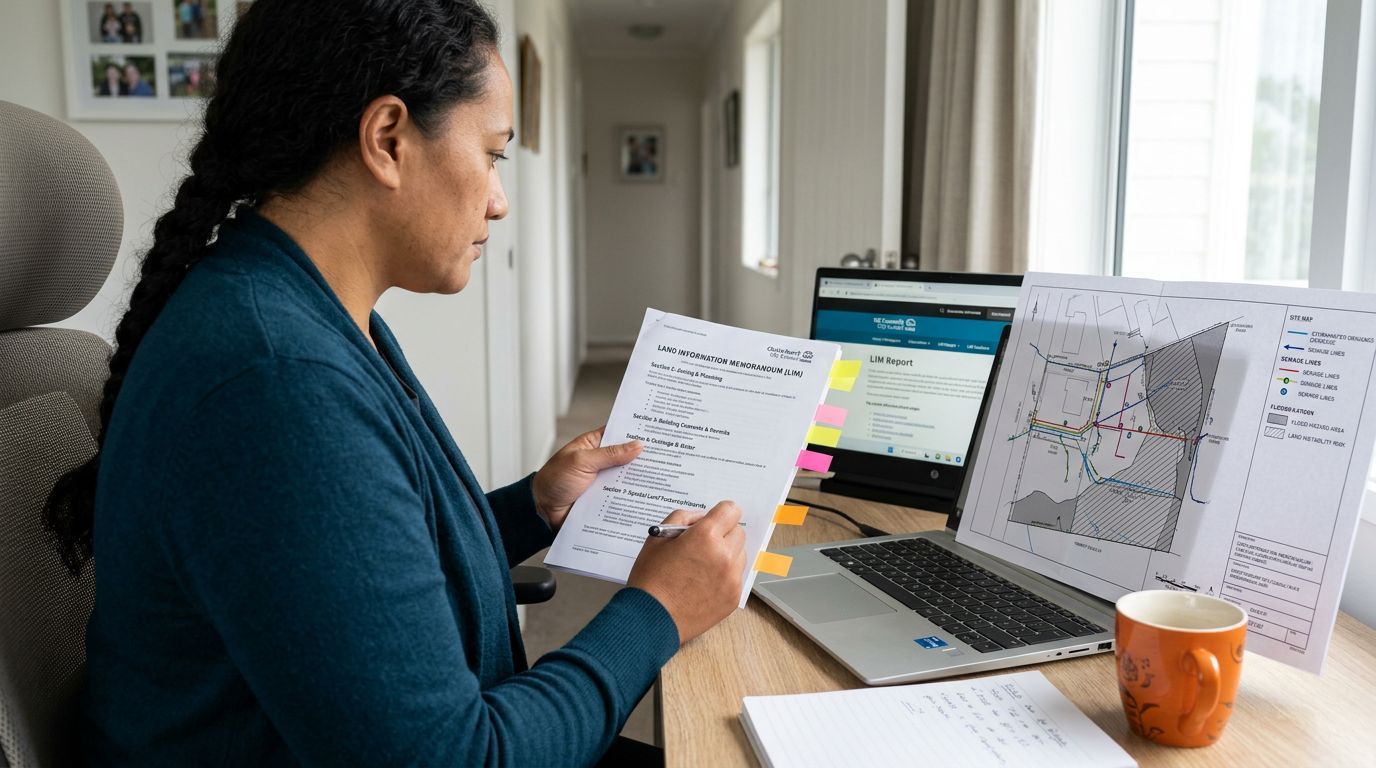
What exactly is inside a LIM report?
A LIM report serves as a legally recognised snapshot of a property. According to settled.govt.nz, LIMs typically include information on stormwater and sewage drains, zoning and conditions, special land features such as erosion or flooding, rates owing, permits and building consents or requisitions, and statutory notices. This information is vital because councils must stand behind the accuracy of the data they provide, making a LIM a small price to pay for extra peace of mind during a property transaction.
We find that the drainage and services section is one of the most practical parts of the report. It shows you exactly where the pipes lie, which is essential if you plan to extend the house or build a deck in the future. If a pipe is located where you want to build, you might face significant restrictions. Furthermore, the zoning information tells you what can be built in your neighbourhood. You might love the quiet cul-de-sac today, but the LIM could reveal that the vacant lot next door is zoned for high-density apartments or commercial use.
How LIM reports are changing in 2025
The way councils report on property risks is undergoing a significant shift to help buyers make better decisions. From 1 July 2025, regional councils must supply all hazard information they hold to territorial councils for inclusion in LIMs. This change ensures that data about flooding, coastal erosion, and other natural risks is no longer siloed in different council departments. It creates a more holistic view of the land you are intending to buy.
Further improvements arrive later in the year. From 17 October 2025, hazard information must be presented in a structured section with plain-language explanations, creating consistency across regions and making hazard data accessible and presented in clear terms. We believe these reforms are a massive win for buyers. In the past, hazard information could be buried in technical jargon that was difficult for a layperson to interpret. These changes mean that your property lawyer can give you even clearer advice on climate-related risks, which is becoming increasingly important for securing insurance and long-term property value.
Budgeting for your due diligence and legal fees
One of the most common questions we hear is about the total cost of getting a deal across the line. Recent guidance for buyers suggests budgeting around $2,800 to $5,600 for full due diligence, with LIM reports typically ranging from about $290 to $564 depending on the council, and standard processing times of up to 10 working days. This budget should also cover a building report, a title search, and your legal fees.
We believe in being straight up about costs so there are no surprises at settlement. At ConveyOnline, our fees for buying a property start from $1,799 inclusive of GST and disbursements. This transparent pricing allows you to plan your budget with confidence. Depending on your specific situation, there may be add-ons to consider. For example, if you are using KiwiSaver funds, there is a $300.00 fee, or if you are receiving a Kāinga Ora First Home Grant, the fee is $100.00. If your purchase involves a trust, we charge an additional $200.00, and drafting a will alongside your purchase costs $150.00. For those buying a unit title property, there is a $150.00 add-on, and turnkey purchases for bare land with a building contract are $400.00. If the property is subject to an EQC claim, we charge $150.00 to handle the extra complexities involved.
You can find a full breakdown of these costs on our property law pricing page. We aim to provide a fixed-fee service that covers the heavy lifting, including the critical task of reviewing the LIM and title, so you can focus on the move itself.

Why you need a property lawyer to interpret the LIM
A LIM report can often be fifty to a hundred pages long, filled with technical maps and historical records. While you can read it yourself, a specialised property lawyer in NZ knows how to spot the red flags that could devalue your home or lead to legal trouble. We look for unconsented works, such as a bathroom renovation or a garage conversion that never received a final code compliance certificate (CCC). If you buy a house with unconsented works, you inherit the responsibility for them, which can make the house difficult to insure or sell later.
We also check for outstanding council notices or requisitions. These are formal demands from the council to fix a problem on the property. If these aren't identified before the contract becomes unconditional, you could be stuck with the bill for repairs. Our role is to flag these issues early so you can renegotiate the price with the seller or, in some cases, walk away from a bad deal. We integrate the LIM review with your building report and title search to ensure every aspect of the property is accounted for.
Frequently Asked Questions about LIM Reports
How long does it take to get a LIM?
Standard processing times for a LIM report are usually up to 10 working days. Some councils offer an urgent service for an extra fee, which can reduce the wait to two or three days. We recommend ordering your LIM as soon as your offer is accepted to ensure you have enough time to review it before your due diligence deadline. Waiting until the last minute can cause unnecessary stress and may lead to you needing an extension on your finance or building report conditions.
What is the difference between a lawyer and a conveyancer?
A conveyancer is a professional who specialises specifically in the legal process of transferring property ownership. A property lawyer provides the same conveyancing services but can also offer broader legal advice on matters like trusts, wills, and complex litigation. In New Zealand, both are qualified to handle your property transaction. The most important factor is choosing a professional who is experienced in property law and conveyancing and who offers a transparent, fixed-fee service.
Does a LIM report show everything?
A LIM report is limited to what the council has on record. It will show you all the building consents that were applied for, but it cannot tell you if the work was actually done to a high standard. This is why we always recommend getting a professional building inspection alongside your LIM. The building report tells you the current physical state of the house, while the LIM tells you the legal and historical state of the land and structures. Using both together gives you the most complete picture possible.
Should I buy a LIM if the real estate agent provides one?
Real estate agents often provide a LIM report to prospective buyers to speed up the process. While this is helpful, you must check how old the report is. If the LIM is several months old, it may not reflect recent council notices or changes in hazard data. Some buyers prefer to order their own report directly from the council so they have a direct legal relationship with the council regarding the accuracy of the information. If you use an agent-provided LIM, we will still review it thoroughly to ensure it meets the necessary standards for your protection.
Protecting your investment with professional advice
The conveyancing process is designed to protect you from the "seriously expensive surprises" that can haunt property owners for years. By investing in a LIM and having it reviewed by property law experts, you are building a personal safety net around your purchase. Whether you are buying a bungalow in Blenheim or a townhouse in Tauranga, the principles of due diligence remain the same. We have seen many cases where a simple LIM review saved a client tens of thousands of dollars by identifying a major drainage issue or an unconsented structural change before it was too late.
Our online conveyancing service is built to make this process as simple and transparent as possible. We handle the legal complexities and provide clear, direct advice so you can make an informed decision. Property ownership is a significant milestone, and we are here to ensure that your journey toward that milestone is secure and predictable.
Disclaimer: The information provided in this article is for general informational purposes only and does not constitute legal or financial advice. Property laws and council regulations can change, and individual circumstances vary. You should always consult with a qualified property lawyer or conveyancer regarding your specific property transaction.